
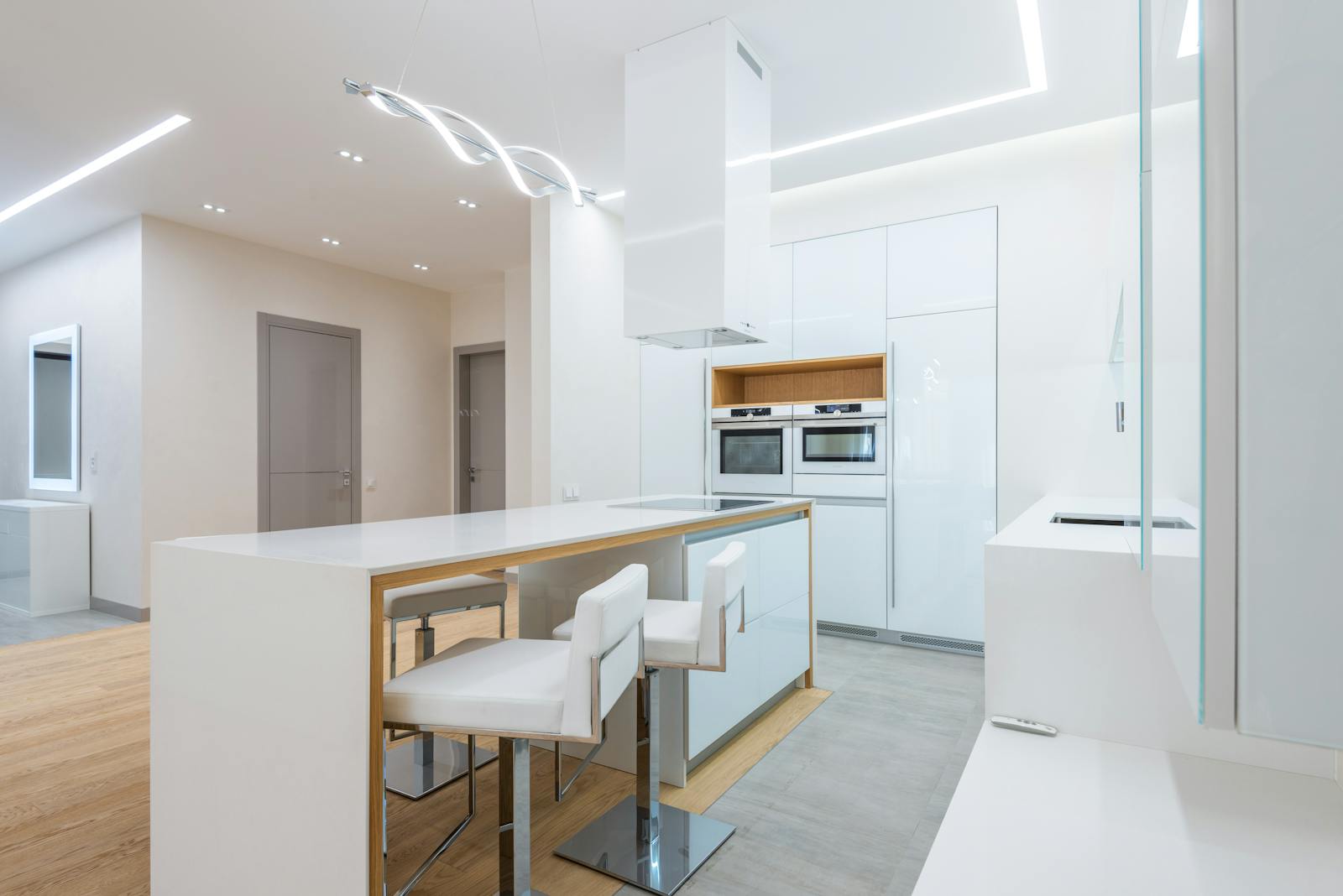
For years, the kitchen work triangle was treated as a golden rule. The idea was simple: keep the sink, stove, and refrigerator in an efficient triangle so cooking feels easier. But kitchens have changed, and so has the way people use them.
Today, many designers are moving toward a five-zone kitchen layout instead. It reflects how modern kitchens actually work, especially in open-plan homes, family spaces, and kitchens where storage, prep, and technology all matter more than they used to.
What is the 5-zone kitchen layout?
The five-zone layout divides the kitchen into five practical areas:
- Consumables zone for food storage, including the fridge and pantry
- Non-consumables zone for dishes, cutlery, and everyday kitchenware
- Cleaning zone for the sink, dishwasher, bins, and cleaning products
- Preparation zone for chopping, mixing, and meal assembly
- Cooking zone for the hob, oven, and key cooking tools
Instead of focusing only on the movement between three major points, this system looks at the full workflow of the kitchen.
Why the work triangle feels outdated
The classic work triangle was built for a different era. It made sense when kitchens were smaller, more closed off, and used mainly by one person at a time. But many modern kitchens now include islands, multiple cooks, larger appliances, integrated storage, and more flexible living patterns.
That makes the triangle too narrow as a planning tool. It does not fully account for prep-heavy cooking, unloading groceries, hiding clutter, or the way families actually move through the space.
Why the 5-zone approach works better
The five-zone layout makes kitchens feel more intuitive because it organizes the space around tasks, not just appliance placement. You keep the things you use for each activity near the area where that activity happens.
That means fewer awkward movements, better storage logic, and a kitchen that feels easier to use every day.
It also supports modern kitchen design
This layout works especially well in contemporary kitchens with islands, tall cabinetry, appliance garages, and open shelving. It also fits homes where the kitchen is not only for cooking, but also for entertaining, working, and spending time together.
As kitchens become more multifunctional, layouts need to reflect that reality.
Final thoughts
The work triangle is not completely useless, but it is no longer enough on its own. The five-zone kitchen layout offers a more realistic way to design for how people cook and live now.
That is why more designers are moving beyond the triangle and treating the kitchen as a smarter, more task-driven space.
Image credits
- Photo by Max Vakhtbovycn via pexels